
Understanding Chill Filtration in Whisky Production: Process, Purpose, and Practical Applications
Whisky enthusiasts often debate whether a bottle labeled “Non-Chill Filtered” offers a more authentic drinking experience. For distilleries, however, the discussion extends far beyond marketing. Chill filtration is a production decision that influences product appearance, process consistency, export performance, and ultimately how a brand positions itself in the marketplace.
There is no universal answer to whether chill filtration is the “right” choice. Some iconic Scotch distilleries continue to chill-filter most of their core range, while many independent bottlers deliberately avoid the process to preserve every component carried over from maturation. Both approaches have proven commercially successful because they serve different consumers and different brand philosophies.
For distilleries planning a new production line or expanding capacity, understanding how chill filtration works—and where it fits within the overall production process—is far more valuable than simply following industry trends.
What Is Chill Filtration?
Chill filtration is a finishing process performed shortly before bottling. Its primary purpose is to improve the visual stability of whisky by preventing cloudiness, often referred to as chill haze, when the spirit is exposed to low temperatures or diluted with water.
Although haze does not affect food safety or indicate spoilage, consumers unfamiliar with whisky production may interpret a cloudy appearance as a quality problem. For brands sold through supermarkets, export distributors, or duty-free retailers, maintaining a consistently bright appearance under various storage conditions is often considered essential.
Why Does Chill Haze Occur?
During fermentation, distillation, and years of cask maturation, whisky naturally develops a wide range of compounds. Alongside desirable aroma molecules, the spirit also contains small amounts of long-chain fatty acids, esters, proteins, and waxes.
At bottling strength—particularly around 40–43% ABV—these compounds remain dissolved under normal conditions. However, when the bottle is chilled or ice and cold water are added, some of them become less soluble and begin forming microscopic particles. These particles scatter light, creating the familiar milky or hazy appearance.
This phenomenon is entirely natural and does not mean the whisky has deteriorated. In fact, many enthusiasts consider it evidence that more of the whisky’s natural components have been retained.
How the Chill Filtration Process Works
The process itself is relatively straightforward but requires careful process control.
A typical chill filtration sequence includes:
- Matured whisky is reduced to its intended bottling strength, or close to it.
- The spirit is cooled to approximately 1°C to 4°C, depending on the producer’s operating parameters.
- As the temperature drops, insoluble compounds begin to aggregate.
- The chilled whisky passes through fine filtration media that remove these particles.
- The filtered spirit is then transferred to the bottling.
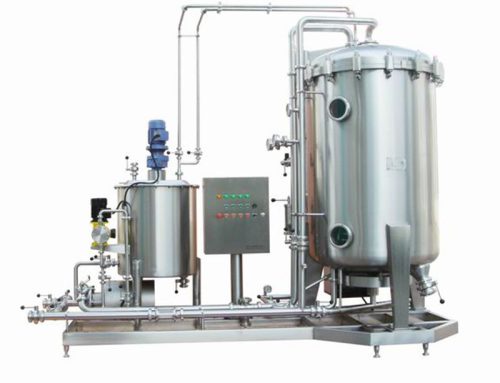
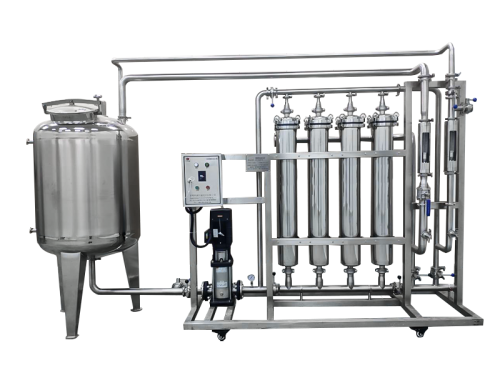
Compared with fermentation or distillation, chill filtration is a simple operation. However, achieving consistent results requires stable temperature control, hygienic piping, reliable transfer pumps, properly sized holding tanks, and well-designed filtration equipment that minimizes oxygen pickup and product loss.
For commercial distilleries, these details can have a measurable impact on production efficiency and product consistency.
Why Some Distilleries Use Chill Filtration
Contrary to popular belief, chill filtration is not intended to “improve” whisky flavor. Its primary objective is visual stability.
Many producers choose chill filtration because it offers several operational advantages:
- Bottles remain clear even after refrigeration or the addition of ice.
- Products appear more consistent across different climates and distribution channels.
- Customer complaints regarding haze or sediment are reduced.
- Large-volume production becomes easier to standardize.
These benefits are particularly valuable for brands supplying supermarkets, hospitality groups, airline duty-free channels, and international distributors, where consumers often expect absolute visual clarity.
By comparison, many premium craft distilleries bottle at 46% ABV or above, where chill haze is naturally less likely to occur. Others intentionally accept slight cloudiness as part of a minimally processed product.

Chill Filtration Is Only One Part of Overall Process Control
It is easy to focus on the filtration stage itself, but experienced distillers understand that spirit quality is determined long before the whisky reaches the filter.
The composition of the spirit entering maturation depends on factors such as:
- Fermentation performance
- Wash composition
- Copper contact during distillation
- Cut point accuracy
- Condenser efficiency
- Spirit handling after distillation
If these upstream processes vary from batch to batch, filtration alone cannot compensate for inconsistent spirit character.
For this reason, many modern distilleries evaluate production as an integrated system rather than a collection of independent machines.
At Tiantai, this systems-based approach is central to every turnkey distillery project. Instead of focusing solely on individual equipment, our engineering team designs complete production lines that support stable fermentation, precise distillation, hygienic spirit transfer, and efficient downstream processing. Whether a client ultimately chooses chill filtration or non-chill filtration, maintaining consistent new make spirit quality is always the priority.
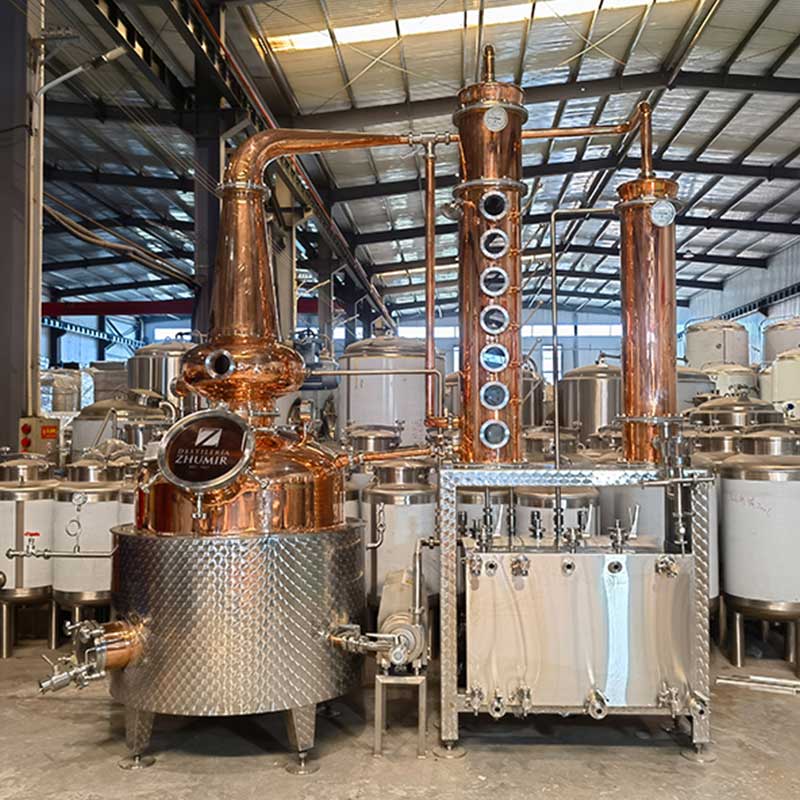
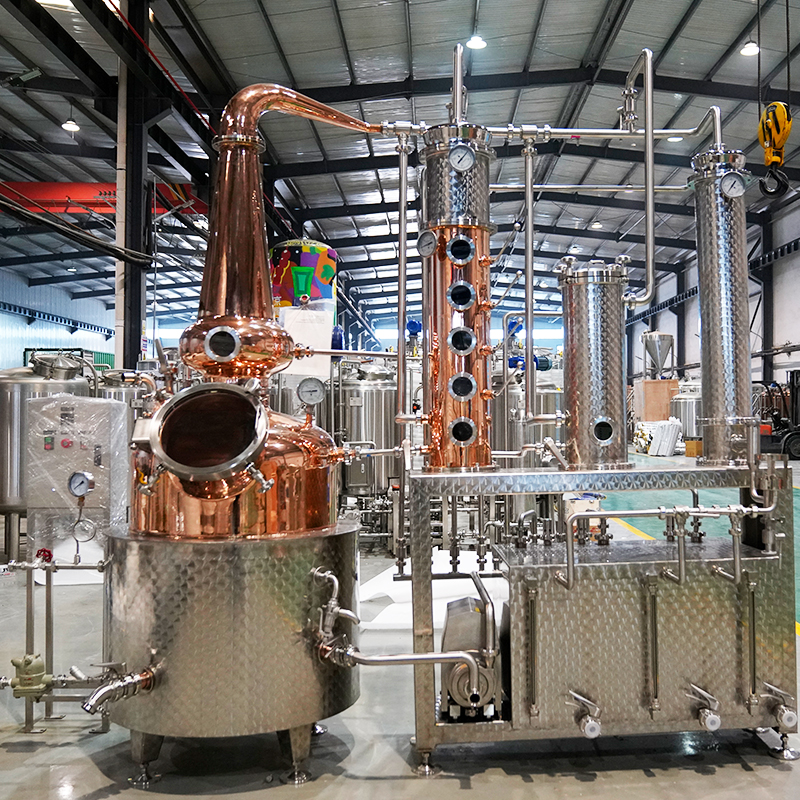
From custom copper pot stills and spirit safes to stainless steel process piping, CIP systems, storage tanks, and bottling preparation equipment, every component is engineered to work as part of a coordinated production process. This allows distilleries to maintain flexibility as product portfolios evolve, rather than limiting future production choices.
A Production Decision, Not a Quality Judgment
One of the biggest misconceptions surrounding chill filtration is that it separates “good” whisky from “bad” whisky.
In reality, the process reflects a producer’s commercial objectives.
A distillery supplying high-volume export markets may reasonably prioritize appearance consistency across thousands of retail locations. Another producer targeting whisky enthusiasts may deliberately retain more naturally occurring compounds to emphasize texture and authenticity.
Neither strategy is inherently superior. Both require careful engineering, process consistency, and a clear understanding of the target customer.
For today’s distillers, the more important question is no longer “Should whisky always be chill filtered?” but rather:
“Does chill filtration support the style of whisky our brand intends to produce?”
Of course, understanding the process is only the first step. The more important question for most commercial distilleries is whether the benefits of chill filtration outweigh its potential impact on spirit character and how today’s consumers interpret that decision. In the next article, we’ll examine the practical advantages and disadvantages of chill filtration, explore changing consumer expectations, and discuss how distilleries can choose the approach that best supports their production goals.
Continue reading: The Pros and Cons of Chill Filtration: What Every Distillery Should Know