How Fermentation Shapes Whisky Flavor | Yeast & Bacteria
Why do some whiskies develop fruity and creamy aromas, while others have more pronounced grassy, malty or robust characteristics? The differences are not determined by distillation and barrel maturation alone. Many of the compounds responsible for a whisky’s distinctive character begin to develop during fermentation.
Yeast is responsible for converting fermentable sugars into alcohol, but its contribution goes beyond ethanol production. During fermentation, yeast also generates higher alcohols, esters, aldehydes and other compounds that influence the aroma of the resulting spirit. Meanwhile, naturally occurring microorganisms, particularly lactic acid bacteria and certain wild yeasts, can further influence the development of these flavor compounds.
In traditional whisky production, fermentation is therefore more than an alcohol-production stage. It is also an opportunity to shape the aroma and flavor profile of new-make spirit.
Understanding the relationship between yeast, bacteria and fermentation conditions helps distillers manage this process more effectively, balancing alcohol yield with the development of desirable sensory characteristics.
More Than Alcohol Production: How Yeast Builds Whisky Flavor
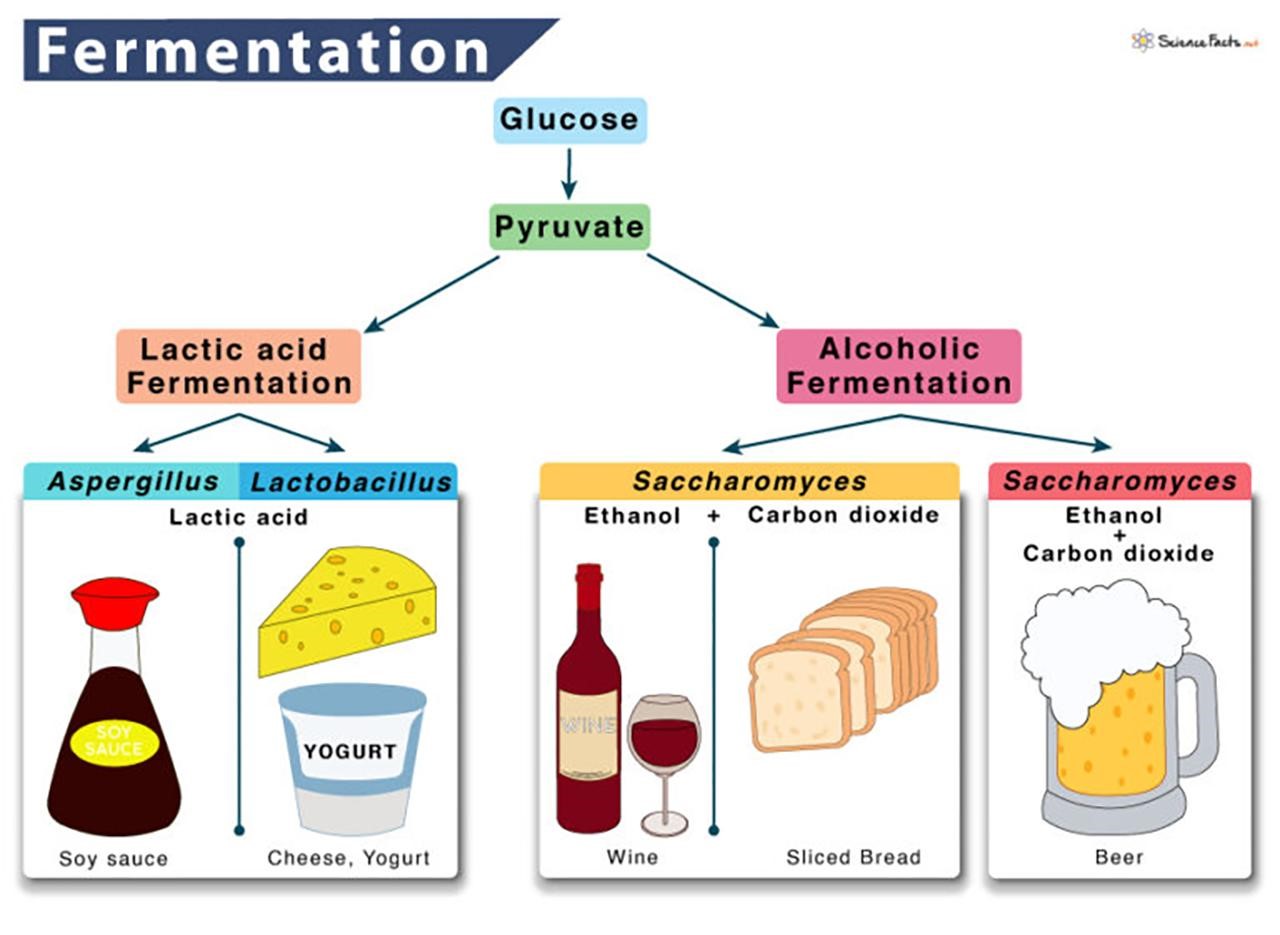
In most commercial whisky distilleries, Saccharomyces cerevisiae is the primary fermentation yeast. It converts fermentable sugars in the wort into ethanol and carbon dioxide, establishing the alcoholic base for subsequent distillation.
However, yeast produces several secondary compounds during this process. These compounds, commonly referred to as congeners, contribute significantly to the aroma and sensory characteristics of new-make spirit.
Some important groups include:
- Higher alcohols: Such as propanol, isobutanol and amyl alcohols. They contribute to the complexity and intensity of the spirit’s aroma.
- Esters: Produced through interactions between alcohols and organic acids. Many contribute fruity, sweet and sometimes floral aromas.
- Aldehydes: Compounds such as acetaldehyde that influence fresh, green and fruity sensory characteristics.
- Organic acids: Including lactic and acetic acids, which can participate in subsequent ester formation.
- Lactones: Compounds associated with sweet, creamy and buttery notes.
The quantities and proportions of these compounds depend on several factors, including yeast strain, fermentation temperature, wort composition, nutrient availability and fermentation duration.
This explains why two distilleries using similar raw materials and still configurations can produce spirits with noticeably different flavor profiles. Fermentation management is one of the variables that can make that difference.
How Lactic Acid Bacteria Influence Whisky Flavor
Yeast is not the only microorganism active during whisky fermentation. Lactic acid bacteria (LAB) are also commonly found in distillery fermentations, particularly during the later stages.
Unlike distilling yeast, which primarily converts sugar into ethanol, lactic acid bacteria produce organic acids, especially lactic acid. Their activity can change the chemical environment of the wash and influence the compounds available for further flavor development.
The Role of Late Lactic Fermentation
During the early stages of fermentation, the rapidly growing yeast population generally dominates microbial activity. As fermentation progresses, sugar availability decreases and yeast activity eventually slows. Under these conditions, lactic acid bacteria may become more active.
This later stage is often referred to as late lactic fermentation.
When it occurs after the main alcoholic fermentation has substantially finished, LAB activity can contribute to flavor development without necessarily competing significantly with yeast for the sugars needed for ethanol production.
One important result is the accumulation of lactic acid. During subsequent processing and distillation, lactic acid can contribute to the formation of ethyl lactate, an ester associated with fruity, sweet and creamy sensory characteristics.
Depending on the bacterial population and fermentation conditions, other esters and organic acids may also develop.
This is one reason why some traditional whisky distilleries allow fermentation to continue beyond the point at which most alcohol production has been completed. The objective is not simply to produce more alcohol, but to influence the character of the resulting spirit.
However, longer fermentation does not automatically mean better flavor. Excessive or poorly controlled bacterial growth can reduce production efficiency and introduce undesirable compounds. The timing and extent of LAB activity are therefore important.
Wild Yeasts: Hidden Contributors to Whisky Aroma
Alongside the primary distilling strain, low populations of wild yeasts may be present in whisky fermentations.
These microorganisms can enter through raw materials, water, the surrounding environment or production equipment. In many traditional distillery fermentations, the process is not completely sterile, so the presence of background microorganisms is not unusual.
The dominant Saccharomyces cerevisiae population generally keeps other yeasts at relatively low levels during active fermentation. Nevertheless, these background populations can influence the overall microbial balance and, under certain conditions, contribute to the development of additional flavor compounds.
Can Wild Yeasts Improve Whisky Flavor?
Some wild yeasts have metabolic characteristics that differ from those of conventional distilling yeast. They may produce different proportions of higher alcohols, aldehydes, esters and other aroma-active compounds.
For example, certain non-Saccharomyces yeasts have been associated with changes in fruity, floral and green or grassy aroma characteristics.
One yeast of interest is Torulaspora delbrueckii. Under particular fermentation conditions, its interaction with lactic acid bacteria may influence the production of compounds associated with fresh, green and grassy notes.
Other microbial interactions can also contribute to the formation of lactones, which are associated with sweet, creamy and buttery characteristics.
These effects are not consistent across all yeast strains or production environments. A microorganism that contributes positively to one fermentation profile may produce an entirely different result under another set of conditions.
For distillers, the important point is that background yeast populations are not necessarily irrelevant contaminants. Their influence depends on their identity, population level, timing of growth and interaction with the dominant distilling yeast and LAB.
When Wild Yeasts Become a Problem
The potential contribution of wild yeast to flavor should not be confused with uncontrolled contamination.
Some wild yeasts can compete with the main distilling strain for fermentable sugars and nutrients. This may slow fermentation, reduce ethanol yield or change the expected congener profile.
Certain contaminating yeasts can also produce excessive aldehydes, acids or other compounds associated with undesirable aromas.
For example, Pichia species and other environmental yeasts may become problematic when they grow beyond the low background levels normally encountered in a managed fermentation.
The distinction lies in microbial balance. Limited microbial diversity may contribute to complexity, while uncontrolled growth can undermine consistency and product quality.
The Connection Between Microbial Activity and Flavor Compounds
The flavor of new-make whisky is not the result of a single compound or microorganism. It develops through interactions between yeast metabolism, bacterial activity, fermentation conditions and subsequent distillation.
Several compound groups are particularly relevant.
Higher Alcohols and Green or Grassy Notes
Higher alcohols, including propanol, isobutanol and amyl alcohols, are among the most abundant flavor-related compounds in new-make spirit.
Their formation is closely associated with yeast metabolism and the availability of amino acids and other nutrients.
Changes in microbial balance during fermentation can influence their concentrations. Some wild yeasts may also contribute additional alcohols and aldehydes, potentially changing the fresh, green or grassy character of the spirit.
However, higher concentrations do not necessarily produce better sensory results. The overall balance between different congeners matters more than maximizing any individual compound.
Esters and Fruity Aromas
Esters are particularly important in the development of fruity and sweet aromas.
One example is ethyl lactate, which can form through the interaction of lactic acid and ethanol. Its presence is associated with fruity, creamy and sweet characteristics.
Other esters, including ethyl acetate and various fatty acid esters, also contribute to the complexity of the spirit.
The final ester profile depends on the availability of precursor compounds, microbial metabolism and the conditions under which fermentation and distillation take place.
This is why late lactic fermentation can have a noticeable influence on the sensory character of whisky, even after the main alcoholic fermentation has finished.
Lactones and Sweet, Buttery Characteristics
Lactones are another interesting group of flavor compounds.
Certain lactones found in whisky are associated with maturation or raw material characteristics, while others can develop through microbial activity during fermentation.
Some lactones contribute soft, sweet, buttery and creamy notes, even at relatively low concentrations.
Their formation can involve yeast metabolism and the transformation of fatty acid-related compounds. Interactions between lactic acid bacteria and yeast may also influence the availability of the substances involved in these pathways.
The resulting sensory contribution is part of the wider complexity of fermentation-derived flavor.

How Distilleries Can Manage Microbial Activity During Fermentation
The challenge for a distillery is not simply to encourage or eliminate microorganisms. It is to maintain a fermentation environment that achieves the required alcohol yield while producing a consistent flavor profile.
Several operational factors deserve attention.
Control the main yeast fermentation.
The selected distilling yeast should establish a reliable primary fermentation. Yeast viability, pitching rate, fermentation temperature and nutrient availability all influence the speed and completeness of sugar conversion.
Monitor fermentation progress.
Specific gravity, temperature and pH trends help operators understand how fermentation is developing. Changes in these parameters can indicate whether yeast activity is slowing as expected or whether an unusual fermentation pattern requires investigation.
Understand fermentation duration.
Extending fermentation may encourage LAB activity and additional flavor development. However, the appropriate duration depends on the desired spirit character, microbial conditions and production schedule. A longer fermentation should be a deliberate process decision rather than an automatic quality improvement.
Maintain effective cleaning and sanitation.
Fermentation equipment, transfer lines, valves and other product-contact surfaces should be designed and maintained for effective cleaning. Uncontrolled microbial accumulation in equipment can make batch-to-batch consistency difficult to achieve.
Evaluate the resulting wash and new-make spirit.
Fermentation data should be considered alongside sensory assessment and, where appropriate, laboratory analysis. This helps distillers determine whether changes in microbial activity are producing the intended result or introducing unwanted characteristics.
For distilleries exploring different flavor profiles, small and controlled process trials are more reliable than making major changes to fermentation conditions across an entire production operation.
Fermentation Equipment and Its Role in Flavor Consistency
Microbial activity is influenced by the fermentation environment, making equipment selection an important part of distillery planning.
Fermentation vessels need to accommodate the required working volume, fermentation duration and temperature conditions. Their construction and internal design should also support effective cleaning and reliable operation across repeated production cycles.
For commercial distilleries, several equipment considerations are particularly relevant:
- Temperature management: Stable and appropriate temperature conditions help maintain predictable yeast activity and fermentation performance.
- Working capacity: Fermentation vessel volume should correspond to the distillery’s batch size, number of stills and production schedule.
- Hygienic construction: Smooth product-contact surfaces, suitable connections and accessible cleaning points help control unwanted microbial accumulation.
- Process coordination: Fermentation tanks should be sized and arranged to support the intended transfer, holding and distillation operations.
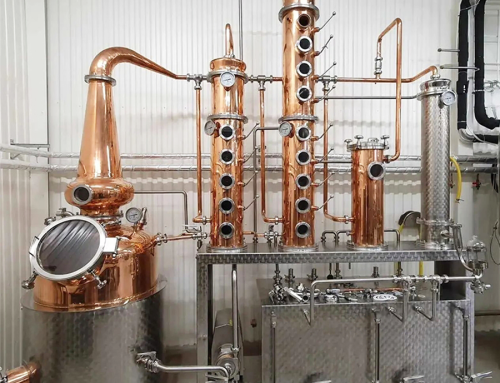
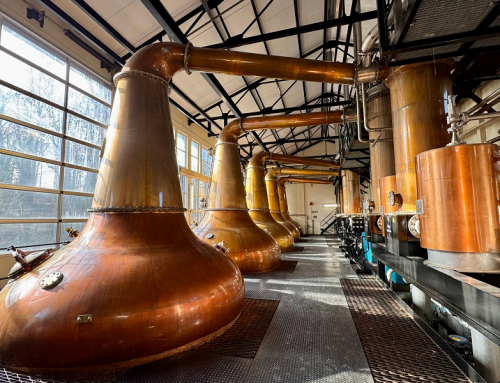
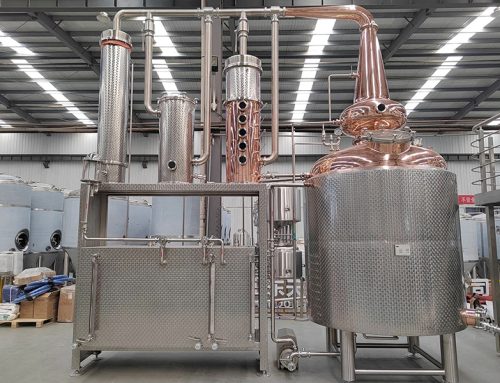
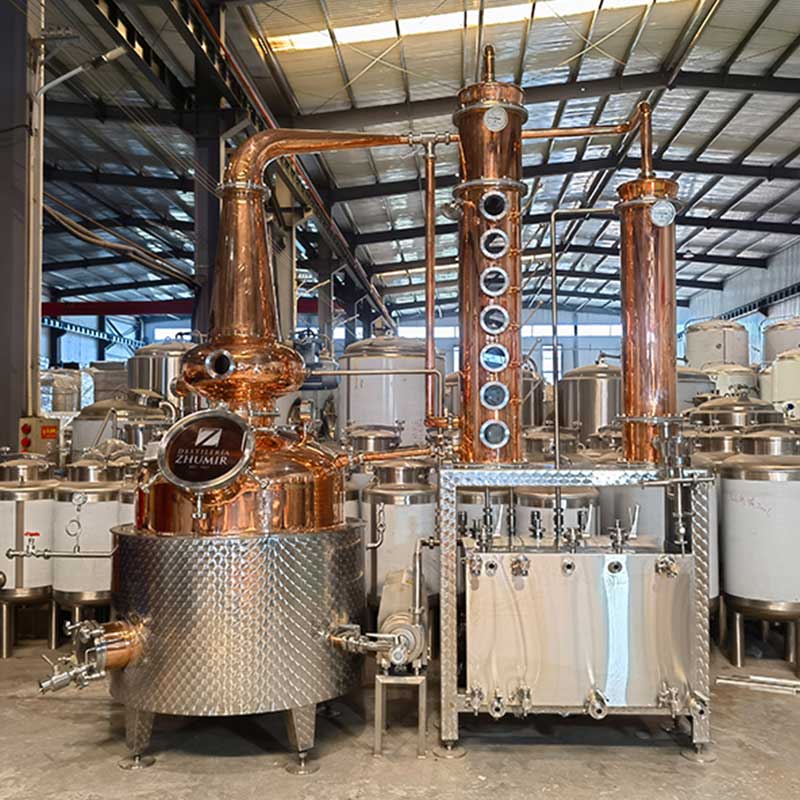
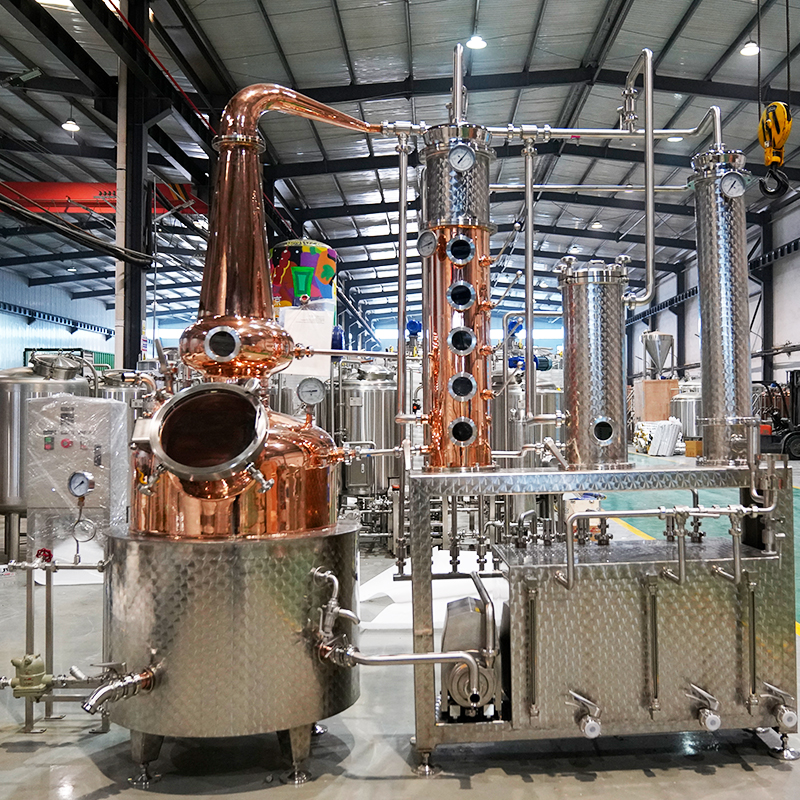
天台山では、, 醸造設備 planning considers the relationship between fermentation, distillation and supporting process systems. Fermentation vessels, ポット・スチル, ハイブリッド・スチル and column stills can be configured according to the intended spirit type and production requirements.
For projects ranging from 100L to 8,000L per batch, the equipment configuration should take into account not only the nominal still capacity, but also the fermentation volume, batch turnover and coordination between upstream and downstream processes.
By considering these requirements during the initial design stage, distilleries can establish a production setup that supports reliable fermentation management and consistent spirit production.
結論
The flavor of whisky begins developing well before the liquid reaches the still. Distilling yeast establishes the alcoholic fermentation, while lactic acid bacteria and certain background wild yeasts may further influence the formation of esters, higher alcohols, aldehydes and lactones.
These microbial interactions can contribute to fruity, creamy, buttery and green or grassy characteristics. At the same time, uncontrolled microbial growth can reduce ethanol yield and introduce undesirable flavors.
For distillers, the objective is not to maximize microbial activity, but to understand when and how different microorganisms influence the fermentation process.
A well-managed fermentation, supported by appropriately designed equipment and consistent process control, provides a more reliable foundation for developing the desired spirit character.
Planning a new distillery or looking to improve your fermentation setup? Contact Tiantai to discuss your spirit type, batch capacity and production requirements. Our team can help develop a distillery equipment configuration that integrates fermentation vessels, distillation systems and supporting process equipment.